Polskipl Englishen françaisfr Deutschde русскийru españoles portuguêspt 한국의ko Türkçetr ไทยth
blog
Dom /

blog

lifeop4 battery pack assembly line

August 12 , 2025

Xiamen Tmax Battery Equipments Limited was set up as a manufacturer in 1995, dealing with lithium battery equipments, technology, etc.  We have total manufacturing facilities of around 200000 square foot and more than 230 staff. Owning a group of experie-nced engineers and staffs, we can bring you not only reliable products and technology, but also excellent services and real value you will expect and enjoy.


lifeop4 battery pack assembly line

It seems there might be a typo or confusion in your query. I believe you may be referring to the "LiFePO4" (Lithium Iron Phosphate) battery pack assembly line, which is a type of lithiumion battery known for its stability, long cycle life, and safety features. These batteries are widely used in various applications including electric vehicles, energy storage systems, and even ebikes due to their reliability and performance.

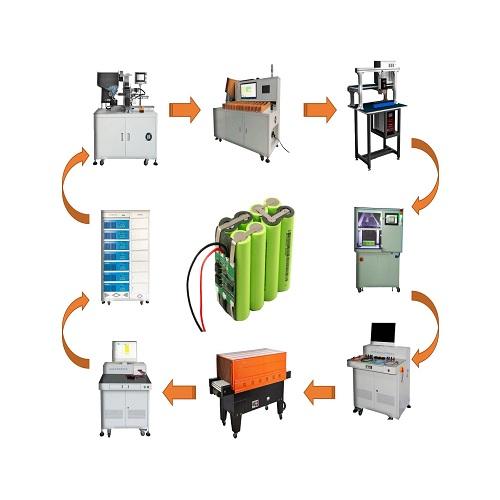
LiFePO4 Battery Pack Assembly Line Overview

The assembly line for LiFePO4 battery packs involves several stages from cell preparation to final testing and packaging. Here’s an overview of the typical process:

#1. Cell Inspection and Sorting
 Purpose: Ensure all cells meet quality standards.
 Process: Automated systems test each cell for capacity, internal resistance, voltage, and other parameters. Cells are then sorted based on these characteristics to ensure uniformity within the pack.

#2. Cell Preparation
 Welding/Cabling: Cells are connected together using spot welding or laser welding to form series and parallel connections as required by the design specifications. Alternatively, busbars can be used for connecting cells.
 Insulation: Proper insulation is applied between cells and connections to prevent short circuits.

#3. Battery Management System (BMS) Integration
 Purpose: The BMS manages charging/discharging processes, monitors cell balance, temperature, and ensures safety.
 Process: The BMS is integrated into the pack with all necessary wiring and connectors to monitor and control the cells effectively.

#4. Assembly into Enclosure
 Enclosure Design: Depending on the application, the pack is assembled into a protective enclosure designed to withstand environmental conditions like moisture, dust, and impacts.

 Sealing: If waterproofing is required, sealing techniques such as potting or gasket seals are applied.


Energy Storage Battery Assembly


#5. Testing and Calibration
 Initial Testing: Each assembled pack undergoes initial electrical tests including chargedischarge cycles, voltage checks, and insulation resistance tests.
 Calibration: The BMS is calibrated to ensure accurate readings and proper management of the battery pack's operation.

#6. Final Inspection and Quality Control
 Purpose: To verify that the battery pack meets all specifications and safety standards.
 Process: Includes visual inspections, functional testing under load, and verification of labeling and serialization.

#7. Labeling and Packaging
 Labeling: Each pack is labeled with essential information such as model number, manufacturing date, serial number, and safety warnings.
 Packaging: Packs are packaged securely for shipping, ensuring they are protected from damage during transport.

Automation and Efficiency
Modern LiFePO4 battery pack assembly lines often incorporate high levels of automation to improve efficiency, reduce human error, and maintain consistent quality. This includes automated guided vehicles (AGVs), robotic arms for precise welding, and advanced testing equipment for comprehensive quality assurance.

By carefully managing each step in the assembly process, manufacturers can produce reliable and safe LiFePO4 battery packs suitable for a wide range of applications. The emphasis on quality control and safety makes these batteries a preferred choice for many demanding applications where reliability is critical.

Dom

produkty

o

kontakt
