Xiamen Tmax Battery Equipments Limited was set up as a manufacturer in 1995, dealing with lithium battery equipments, technology, etc. We have total manufacturing facilities of around 200000 square foot and more than 230 staff. Owning a group of experie-nced engineers and staffs, we can bring you not only reliable products and technology, but also excellent services and real value you will expect and enjoy.
Solid State Battery Manufacturing Line: Overview, Features, Process, Applications, Advantages, and Conclusion
Overview
A Solid State Battery Manufacturing Line is an integrated system of advanced equipment designed to produce solid-state batteries (SSBs), which utilize solid electrolytes instead of conventional liquid or gel-based electrolytes. This manufacturing line represents a significant evolution in battery production technology, addressing the limitations of traditional lithium-ion batteries in terms of safety, energy density, and lifecycle. By incorporating precise material handling, thin-film processing, and high-accuracy assembly techniques, solid state battery manufacturing lines enable the scalable production of next-generation energy storage devices. These lines are essential for industries seeking safer and more efficient batteries, particularly in electric vehicles, consumer electronics, and grid storage systems.
Features
Solid state battery manufacturing lines are characterized by several advanced features that distinguish them from conventional battery production systems:
1. High Precision Processing: The production of thin solid electrolyte layers requires micron-level control in coating, pressing, and deposition processes.
2. Integrated Automation: Fully automated systems reduce human intervention, ensuring consistency, repeatability, and high throughput.
3. Controlled Environment: Many processes are conducted in dry rooms or inert atmospheres to prevent contamination and moisture-related degradation.
4. Multi-Layer Fabrication Capability: The equipment supports the stacking or lamination of multiple functional layers, including cathode, solid electrolyte, and anode.
5. Modular Design: Manufacturing lines are often modular, allowing customization and scalability based on production requirements.
Process
The manufacturing process of solid state batteries involves several critical steps, each supported by specialized equipment within the production line:
1. Material Preparation: Active materials for cathodes and anodes, along with solid electrolytes (such as sulfides, oxides, or polymers), are synthesized and processed into powders or slurries. Mixing and homogenization equipment ensure uniform composition.
2. Film Formation: Thin layers of electrode materials and solid electrolytes are formed באמצעות techniques such as tape casting, slot-die coating, or physical vapor deposition (PVD), depending on the battery design.
3. Drying and Densification: Coated films undergo controlled drying to remove solvents, by pressing or sintering to achieve dense and uniform structures with optimal ionic conductivity.
4. Layer Stacking or Lamination: Individual layers are aligned and stacked or laminated to form a complete cell structure. Precision alignment systems ensure proper contact between layers.
5. Cell Assembly: The stacked components are assembled into cells, often involving sealing, current collector attachment, and packaging.
6. Formation and Testing: The assembled cells undergo electrochemical formation cycles and rigorous testing to evaluate performance, safety, and reliability.
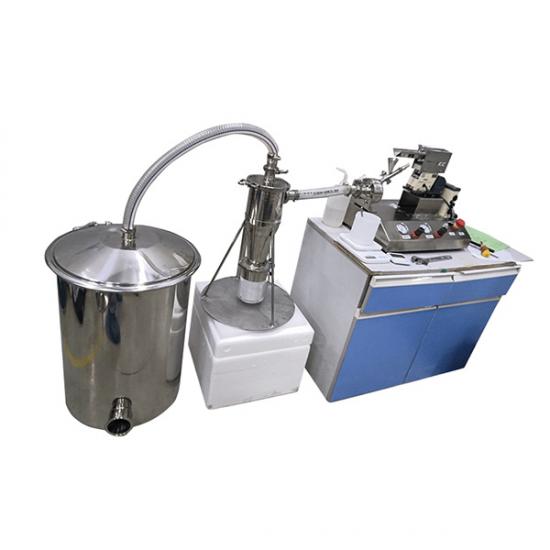
Air Flow Fibrosis Machine
Applications
Solid state battery manufacturing lines support a wide range of applications across emerging and established industries:
1. Electric Vehicles (EVs): Solid-state batteries offer higher energy density and improved safety, making them ideal for next-generation EVs.
2. Consumer Electronics: Devices such as smartphones, laptops, and wearable electronics benefit from compact and long-lasting batteries.
3. Grid Energy Storage: Solid-state batteries provide reliable and safe energy storage solutions for renewable energy integration.
4. Aerospace and Defense: High-performance and safety-critical applications require batteries with superior stability and durability.
5. Medical Devices: Implantable and portable medical devices demand batteries with high reliability and safety.
Advantages
Solid state battery manufacturing lines provide several advantages over conventional battery production systems:
1. Enhanced Safety: The use of solid electrolytes eliminates the risk of leakage and significantly reduces flammability hazards.
2. Higher Energy Density: Precise manufacturing processes enable thinner layers and higher packing efficiency, resulting in increased energy storage capacity.
3. Longer Lifecycle: Improved material stability leads to longer cycle life and reduced degradation over time.
4. Improved Process Control: Advanced automation and environmental control ensure consistent product quality.
5. Reduced Defects: High-precision equipment minimizes defects such as voids, delamination, and contamination.
6. Scalability: Modular manufacturing lines can be scaled from pilot production to full industrial deployment.
Conclusion
The Solid State Battery Manufacturing Line represents a transformative advancement in battery production technology, enabling the commercialization of safer, more efficient, and longer-lasting energy storage systems. By integrating high-precision equipment, advanced material processing, and automated control systems, these manufacturing lines address the technical challenges associated with solid-state battery fabrication. As demand for high-performance batteries continues to grow across electric vehicles, consumer electronics, and renewable energy sectors, solid state battery manufacturing lines will play a pivotal role in shaping the future of energy storage. Continued innovation in materials, equipment design, and process optimization is expected to further enhance production efficiency and accelerate the widespread adoption of solid-state battery technology.



 Obsługiwana sieć IPv6
 pl
pl en
en fr
fr de
de ru
ru es
es pt
pt ko
ko tr
tr th
th


